Global:
The
jewellery industry is undergoing a transformation, with 3D printing emerging as
a key player in the manufacturing process. Designers and manufacturers are
increasingly turning to 3D printing to create wax patterns for casting, bringing
unprecedented levels of precision, efficiency, and cost-effectiveness to the
production of jewellery.
For
many jewellery makers, 3D printing offers a solution that bridges the gap
between traditional craftsmanship and modern manufacturing needs. With 3D
printing, intricate designs can be brought to life with a level of detail that
was previously unattainable. While traditional methods like hand-carved wax
patterns have long been the standard, they come with limitations in terms of
speed and scalability. In contrast, 3D printing allows for faster production
while maintaining high precision, enabling designers to push the boundaries of
creativity without compromising on quality.
One
of the major benefits of 3D printing in jewellery is the reduction of material
waste. With traditional wax carving, excess material is often wasted, and
adjustments can require reworking large portions of the design. In contrast, 3D
printing allows manufacturers to print only what’s needed, reducing waste and
encouraging more sustainable practices. Additionally, the ability to produce
intricate patterns quickly and efficiently increases profitability by reducing
the time and cost associated with traditional methods.
The
rise of dedicated jewellery 3D printers has also brought improved compatibility
with standard casting processes. These printers are designed to use 100% wax
material, ensuring a clean burnout and smooth surface, which is essential for
the casting process. This compatibility means that jewellery makers can produce
high-quality pieces with minimal post-processing, streamlining production and
reducing the time it takes to move from design to finished product.
One
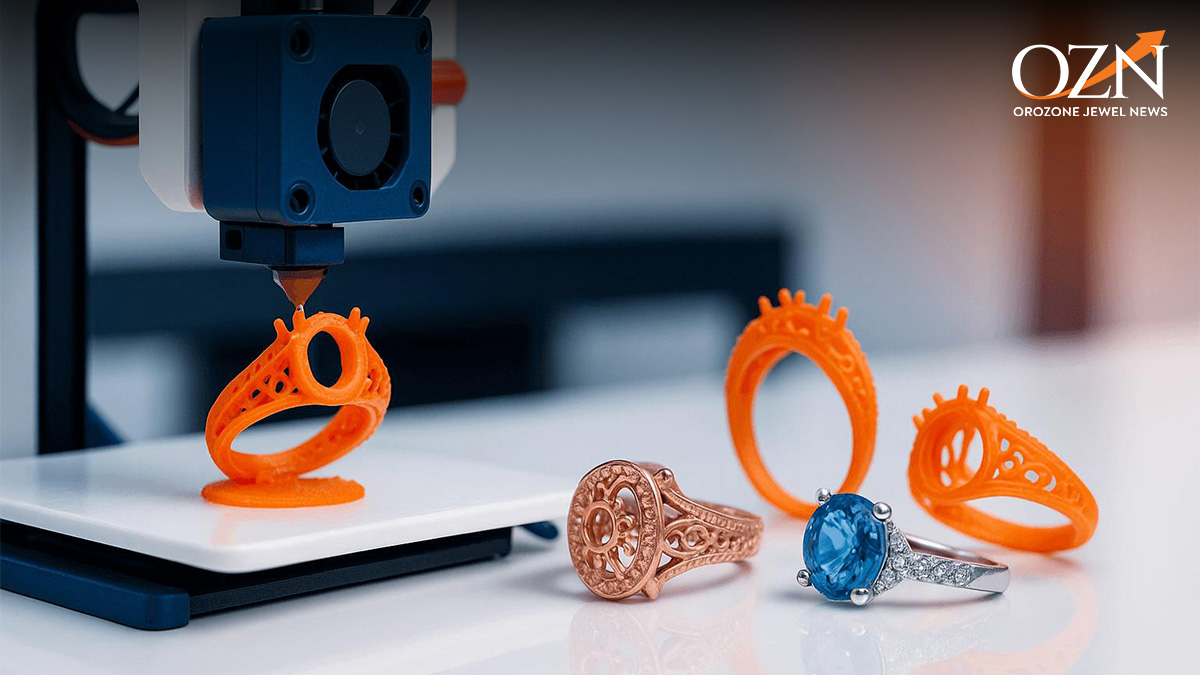
of the key advancements in 3D printing for jewellery is the ability to
integrate stone setting directly into the wax models. This feature allows
jewellers to save valuable time and resources by setting stones into the models
before casting, eliminating the need for a separate setting process. This
innovation not only reduces costs but also speeds up production, providing a
more efficient workflow for jewellery makers.
In
addition to its practical benefits, 3D printing offers jewellers the
opportunity to create more intricate and complex designs. Unlike traditional
methods, 3D printing can produce geometries that would be impossible to achieve
by hand-carving. This opens up new possibilities for unique and innovative
jewellery pieces that can stand out in a competitive market.
Furthermore,
3D printing provides jewellers with greater control over the production
process. With the ability to quickly adjust designs, experiment with new ideas,
and iterate on concepts, jewellery makers can innovate more freely, ensuring
that their creations are both creative and commercially viable. The ability to
print multiple iterations of a design in a short amount of time also allows for
faster prototyping and testing, reducing the risk of costly mistakes.
As
the jewellery industry continues to embrace 3D printing, the potential
applications are vast. From custom wedding bands to high-fashion jewellery,
medals, and watch cases, 3D printing is allowing designers to produce a wide
variety of items with intricate details. The technology is particularly
well-suited for creating unique, one-of-a-kind pieces that cater to the growing
demand for personalized jewellery.
The
adoption of in-house 3D printing for jewellery manufacturing is not just about
improving efficiency; it’s about empowering businesses to take greater control
of their designs and production processes. As more jewellery makers integrate
3D printing into their operations, the technology is reshaping the way
jewellery is made, offering a more sustainable, cost-effective, and innovative
approach to jewellery manufacturing.
With
3D printing continuing to evolve, the future of jewellery production looks
brighter than ever. The technology offers a powerful tool for designers and
manufacturers looking to stay competitive in an increasingly fast-paced and
dynamic market.
Orozone
Tech News