
INDIA:
High gold prices and duty pressure have changed the jewellery business
environment. Jewellers can no longer rely only on heavy gold-weight sales to
protect revenue and profitability. The new priority is clear: use less gold,
reduce process loss, recover more metal and create higher jewellery value
through design, diamonds, coloured gemstones and technology.
The solution is not limited to cost
control. It calls for a complete shift from gold-heavy jewellery to design-led,
diamond-led and gemstone-led value creation, supported by smarter manufacturing
technologies.
For Indian jewellers, technology is no
longer optional. It is becoming central to margin protection, inventory planning,
manufacturing efficiency and long-term competitiveness.
1. Shift From Gold-Heavy Jewellery To
Diamond- And Gemstone-Led Jewellery
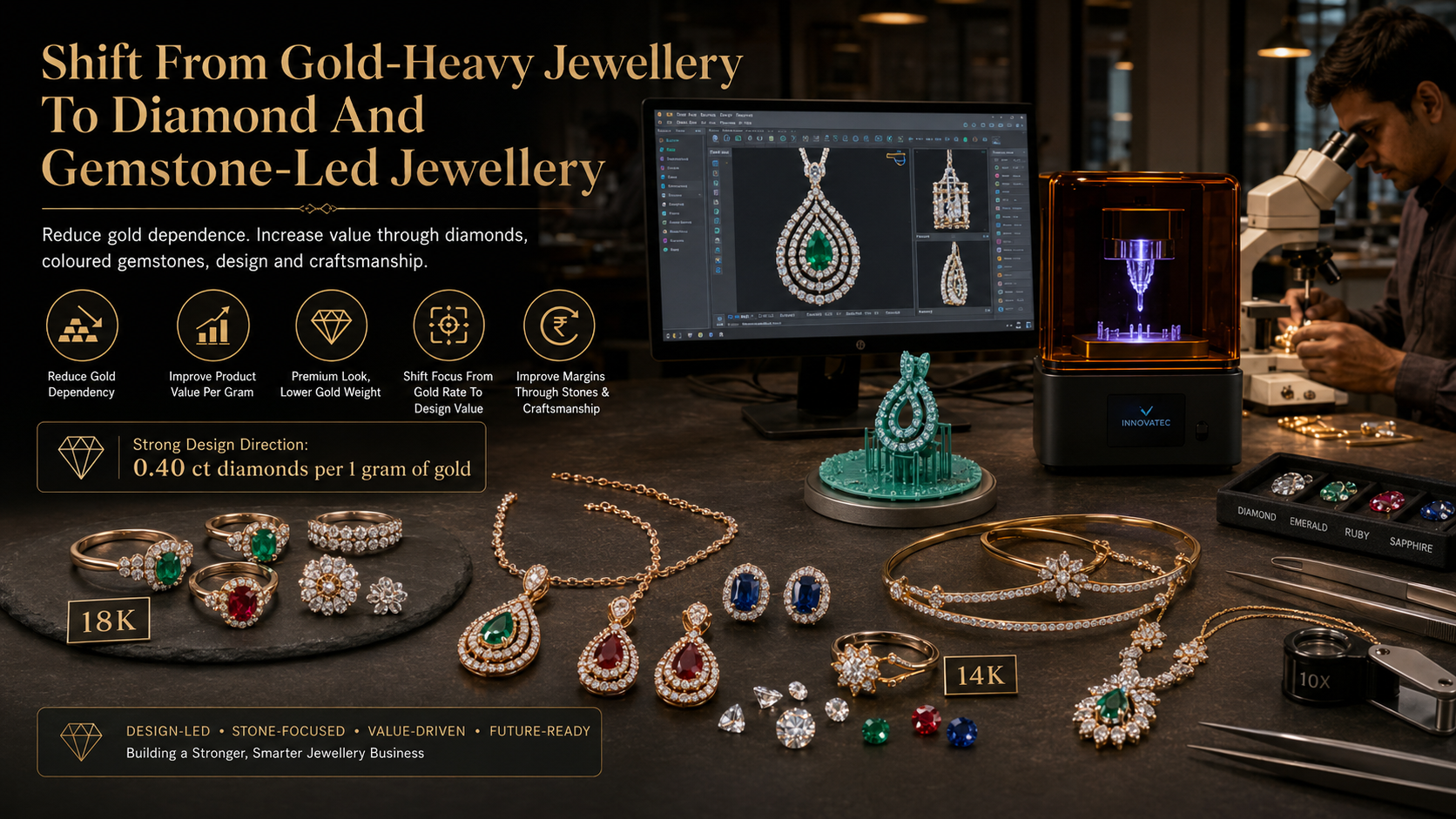
The most important strategy is to reduce
dependence on pure gold weight and increase the final product value through
diamonds, coloured gemstones, design and craftsmanship.
Jewellers should focus on lightweight but
high-value jewellery in 14K and 18K gold, especially with diamonds and coloured
gemstones. Instead of selling only by gold weight, the focus must shift to complete
product value.
A strong design direction can be to use
around 40 cents of diamonds per gram of gold, wherever the design
category permits. This means a piece using 1 gram of gold can be engineered
with approximately 0.40 carat of diamonds, making the jewellery look richer
while controlling gold usage.
This helps jewellers reduce gold
dependency, improve product value per gram, create premium-looking jewellery
with lower gold weight, shift customer attention from gold rate to design value
and improve margins through diamonds, gemstones and craftsmanship.
2. Promote 14K High-Quality Diamond
Jewellery
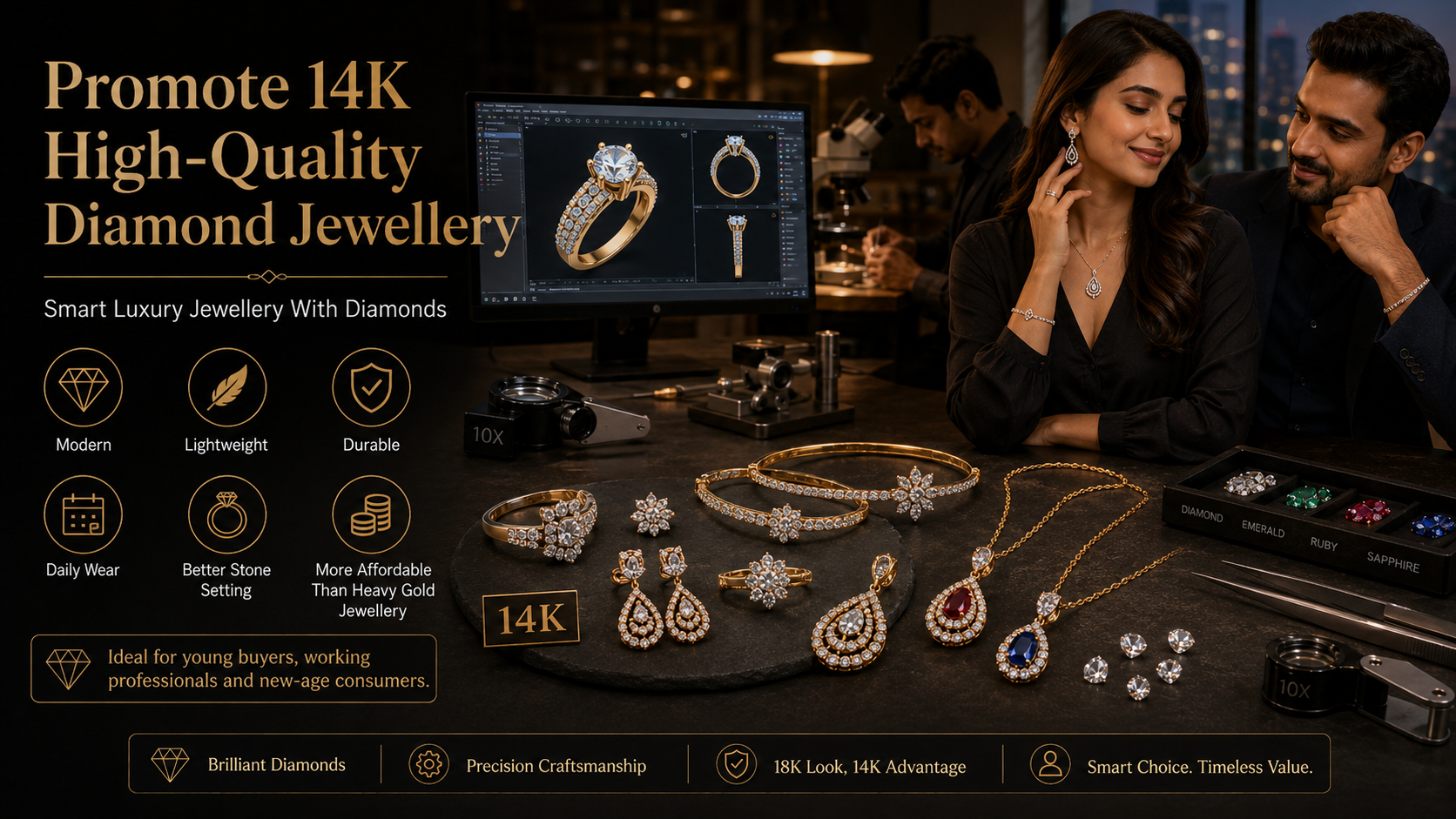
Jewellers should actively build collections
in 14K gold, especially for diamond jewellery.
14K gold uses less pure gold than 18K or
22K, but offers good strength, durability and better support for stone setting.
It is suitable for rings, bracelets, pendants, earrings, daily-wear jewellery
and lightweight statement pieces.
The positioning should not be “low-cost
gold”. It should be presented as smart luxury jewellery with diamonds.
14K diamond jewellery can be promoted as
modern, lightweight, durable, suitable for daily wear and ideal for young
buyers, working professionals and new-age consumers. It also allows jewellers
to offer diamond and gemstone jewellery at more balanced price points in a
high-gold-price environment.
3. Use Coloured Gemstones To Increase
Visual Value
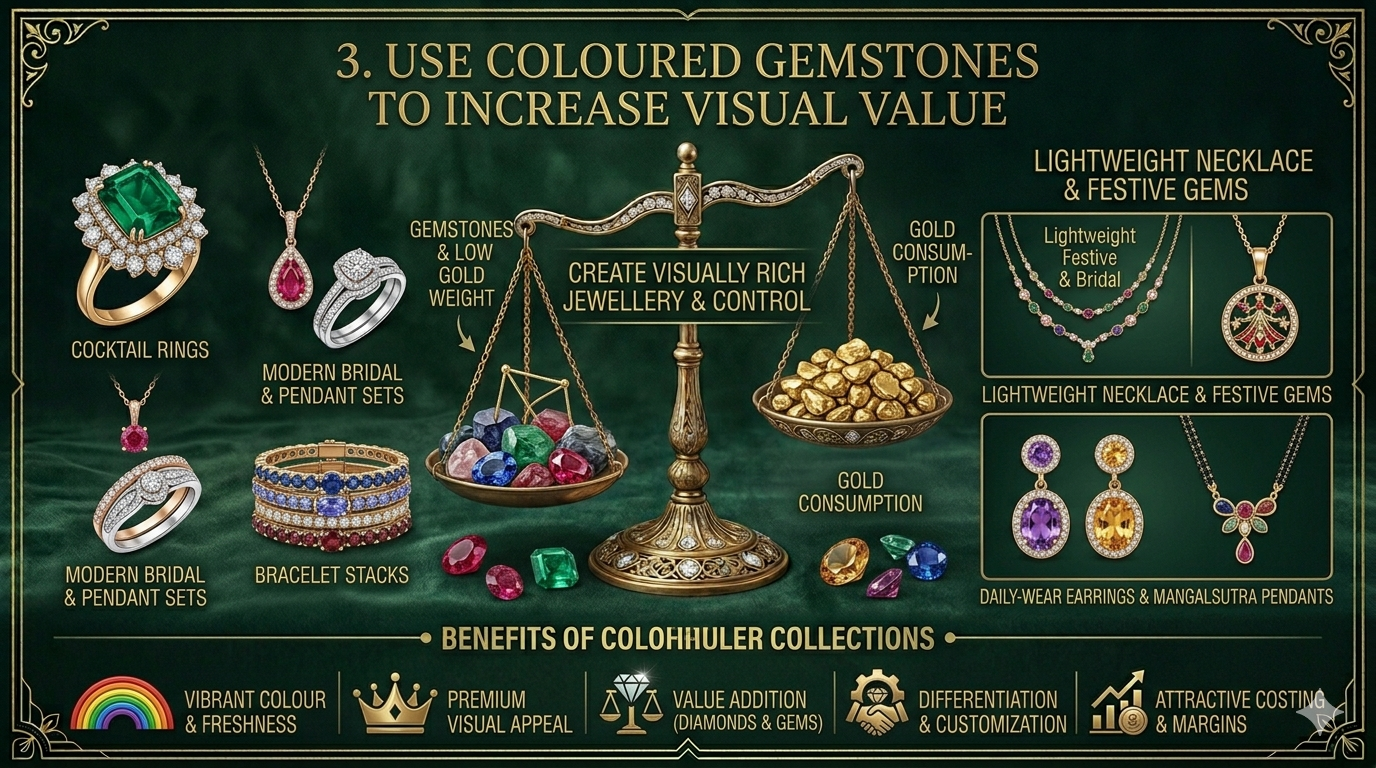
Coloured gemstones can help jewellers
create visually rich jewellery without increasing gold weight.
Rubies, emeralds, sapphires, tourmalines,
tanzanites, garnets, topaz, amethyst and other gemstones bring colour,
freshness and premium appeal to lightweight designs. They also help jewellers
create stronger product differentiation in a market where customers are
becoming more selective.
Strong product categories include gemstone
rings, cocktail rings, pendant sets, bracelet stacks, daily-wear earrings,
colour-stone mangalsutra pendants, festive gemstone jewellery, lightweight
necklace sets and modern bridal gemstone jewellery.
This allows jewellers to offer variety and
luxury appeal while controlling gold consumption.
4. Use CAD To Engineer Lightweight
Jewellery
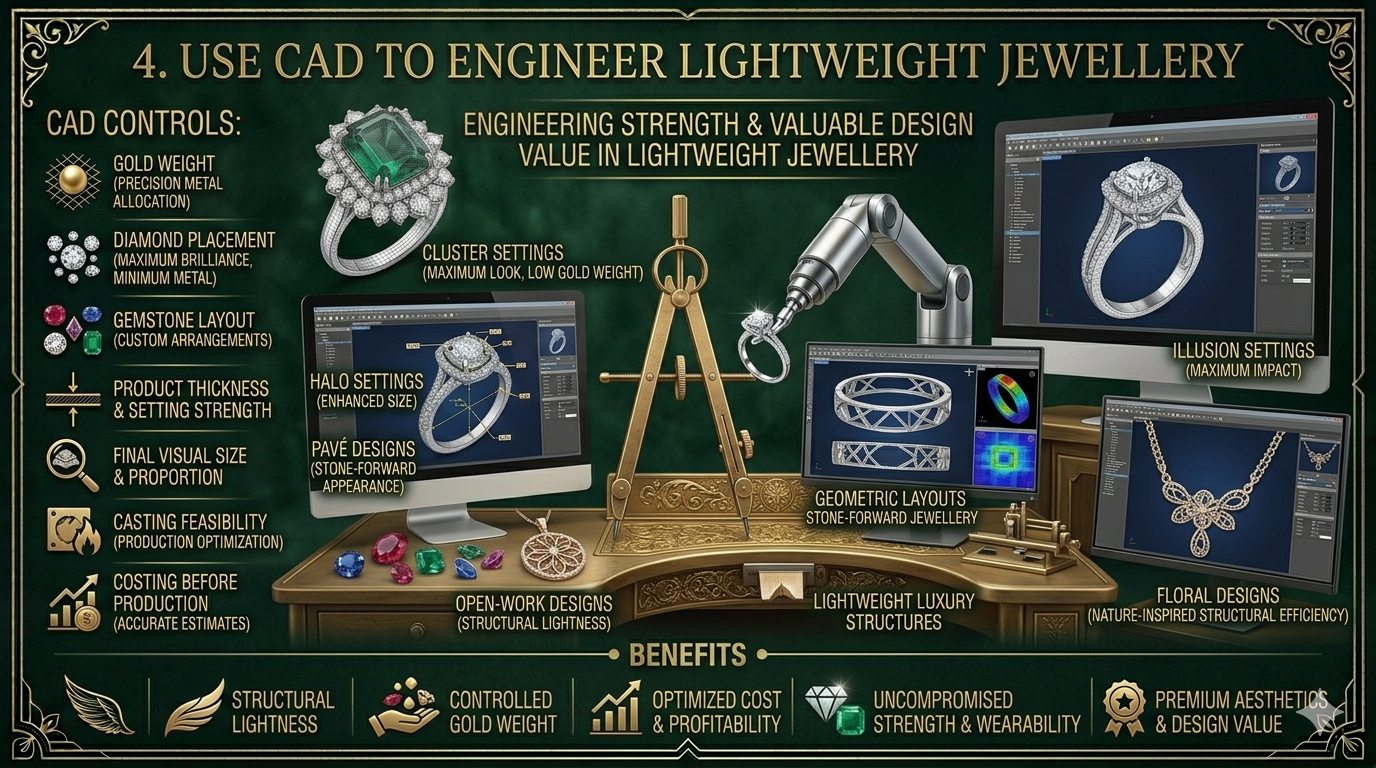
CAD design becomes critical in the new
jewellery business model. Jewellers should not reduce gold weight randomly. The
jewellery must be engineered correctly so that it remains strong, wearable,
production-friendly and visually premium.
CAD can help control gold weight, diamond
placement, gemstone layout, product thickness, setting strength, final visual
size, casting feasibility and costing before production.
Through CAD, jewellers can create
large-looking jewellery with lower gold weight and better design value.
Recommended design styles include cluster settings, halo settings, pavé
designs, illusion settings, open-work designs, floral designs, geometric
layouts, stone-forward jewellery and lightweight luxury structures.
The goal is to make jewellery look premium
without depending only on heavy gold weight.
5. Adopt Electropolishing Instead Of
Traditional Filing And Buffing
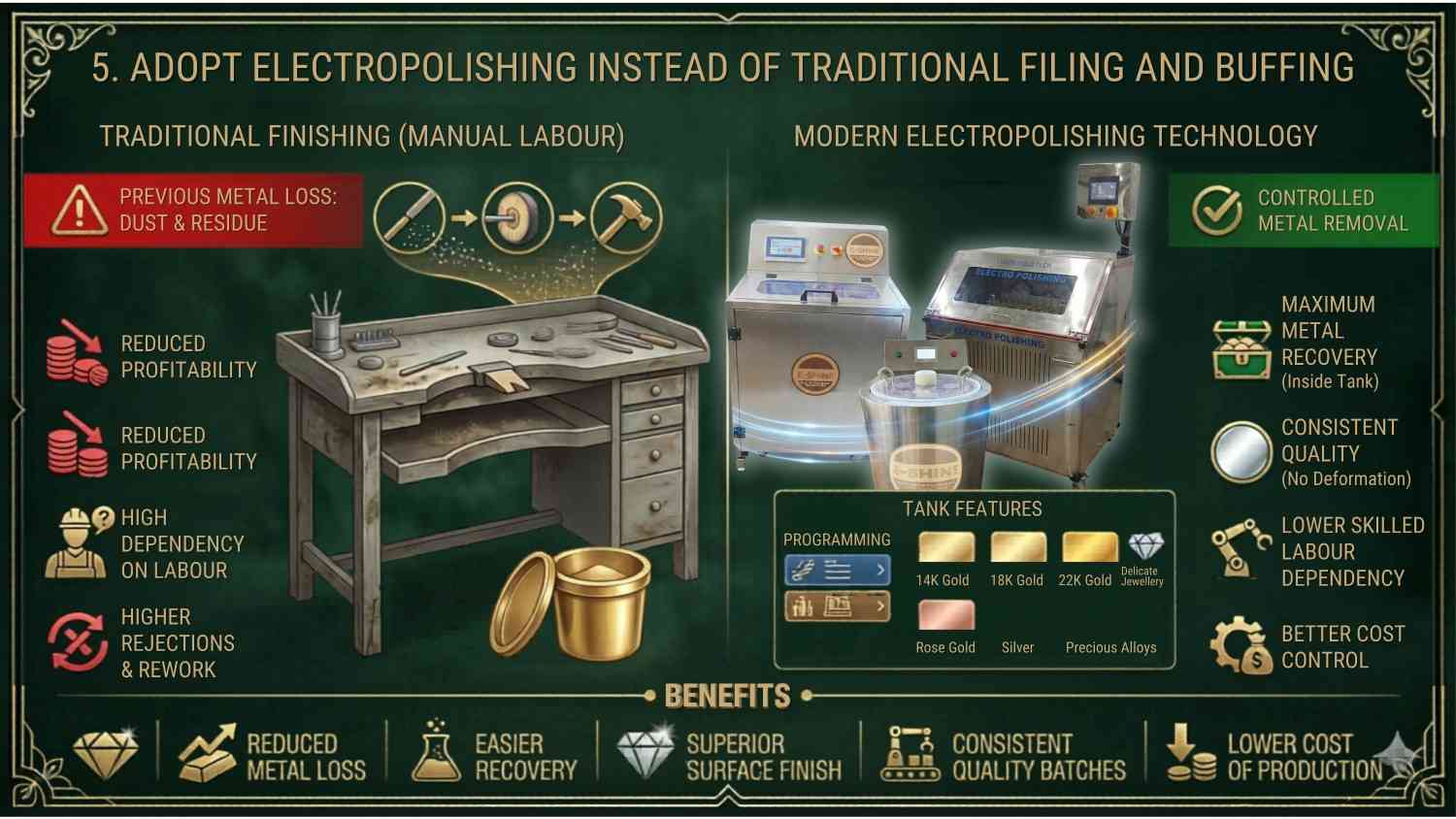 One of the most important manufacturing
solutions is the adoption of electropolishing technology instead of traditional
filing, buffing and manual polishing methods.
One of the most important manufacturing
solutions is the adoption of electropolishing technology instead of traditional
filing, buffing and manual polishing methods.
In traditional polishing, precious metal is
lost through dust, filing residue and buffing waste. Recovery depends heavily
on labour discipline and workshop systems. When gold prices are high, even
small finishing losses directly affect profitability.
Electropolishing offers a more controlled
process. Jewellery is processed inside electropolishing tanks, where finishing
takes place through an automated electrochemical process. Since the process
happens inside the tank, metal removal is controlled and recovery becomes
easier.
Electropolishing systems can have automated
programmes for different metal categories such as 14K gold, 18K gold, 22K gold,
rose gold, silver and other precious metal alloys.
This reduces dependency on highly skilled
manual polishing labour and brings consistency across production batches. For
lightweight diamond and gemstone jewellery, electropolishing is especially
useful because delicate designs can lose shape or weight during aggressive
manual polishing.
6. Use Real Wax 3D Printing For
Made-To-Order Production
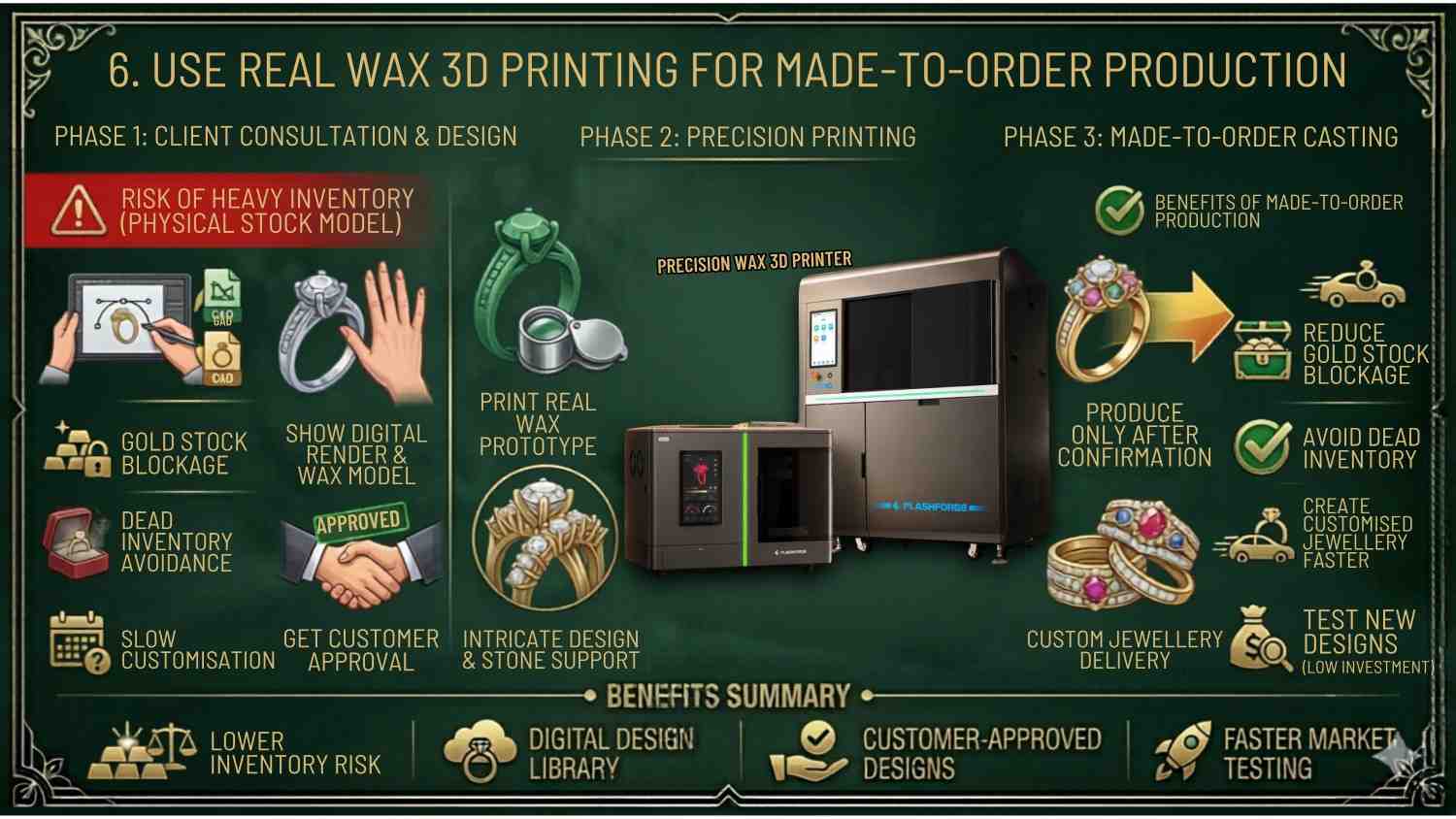
High gold prices make heavy inventory
risky. Jewellers should reduce physical stock and move towards a made-to-order
production model.
With real wax 3D printing, jewellers can
print wax models before casting in gold. They can show designs, take customer
approval and produce only after confirmation.
This helps reduce gold stock blockage,
avoid dead inventory, create customised jewellery faster, test new designs
without heavy gold investment, maintain a digital design library and produce
only after customer confirmation.
This is especially useful for diamond and
gemstone jewellery, where the customer is buying design value and not just gold
weight.
7. Build Digital Catalogues And Virtual
Inventory Through 3D Rendering
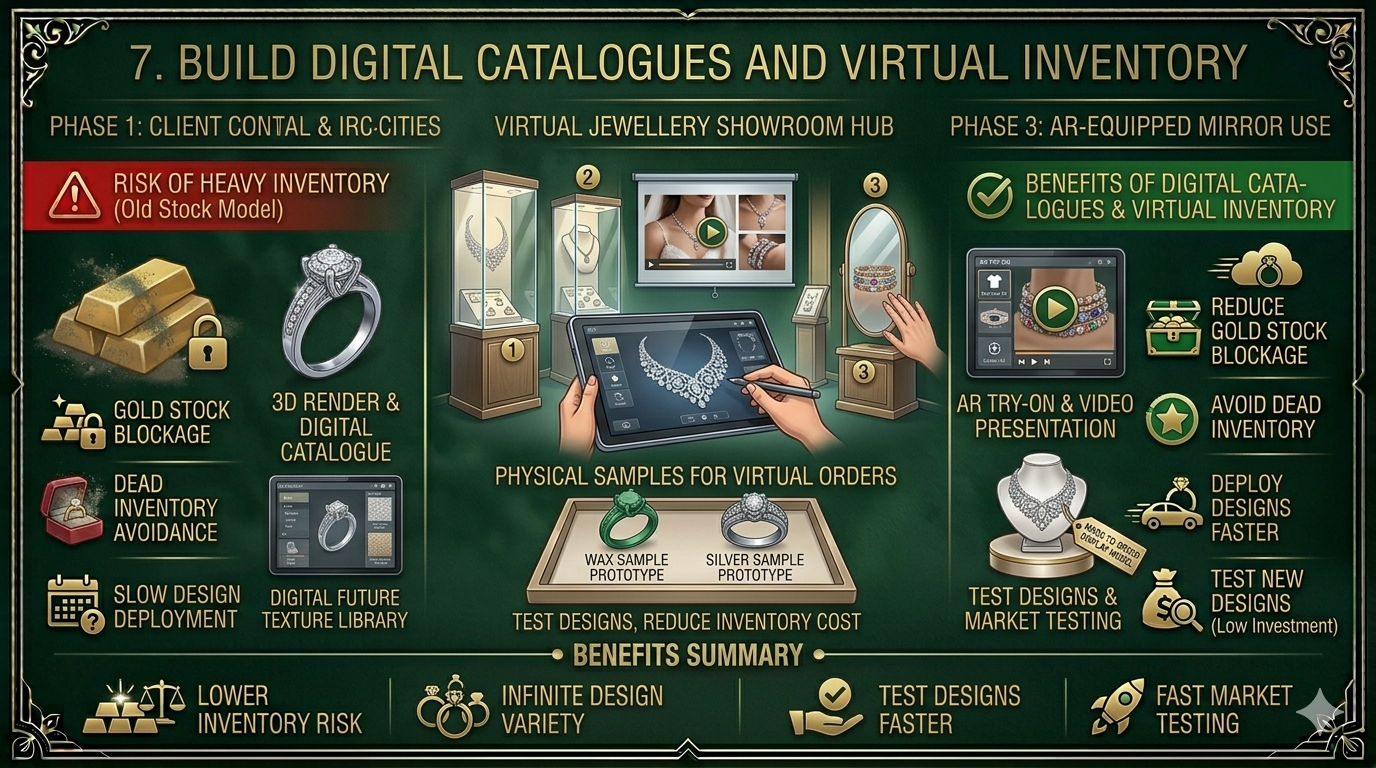
Retailers do not need to physically stock
every design in gold. They can create digital catalogues and virtual inventory,
where customers can view designs through high-quality rendered images, videos
and interactive 3D presentations before placing an order.
Platforms such as iJewel3D allow jewellers
to convert existing 3D jewellery designs into online models, customise them
digitally and share them with customers. These tools support 3D jewellery
showcases, content management, AR try-on, rendering automation and interactive
online jewellery display.
Jewellers can use digital visualisation
tools for 3D rendered jewellery images, product videos, digital catalogues, AR
try-on tools, interactive models, customer sharing links, wax samples, silver
samples and made-to-order display models.
This helps jewellers show a wider design
range without blocking heavy investment in physical gold stock. In simple
terms, digital catalogues help jewellers sell more designs without holding more
gold.
8. Use Digital Metal Accounting To
Control Loss
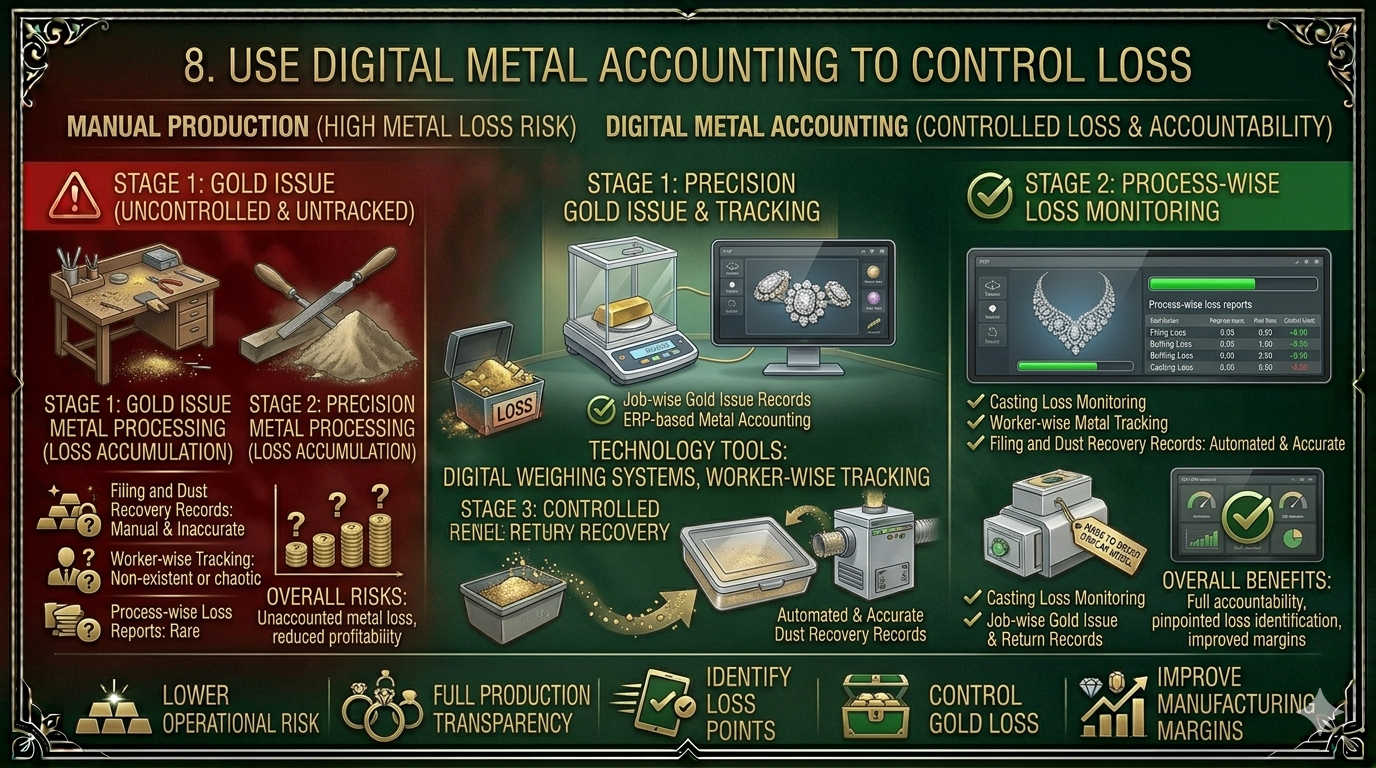
When gold prices are high, every production
stage must be monitored. Jewellers should track how much gold is issued,
processed, recovered and returned.
Technology can help through digital
weighing systems, job-wise gold issue and return records, worker-wise metal
tracking, process-wise loss reports, casting loss monitoring, filing and dust recovery
records and ERP-based metal accounting.
This creates accountability and helps
identify where gold loss is happening.
For manufacturers, digital metal accounting
is not just an administrative tool. It is a profit-protection system.
9. Build An Old Gold Exchange And
Recycling Workflow
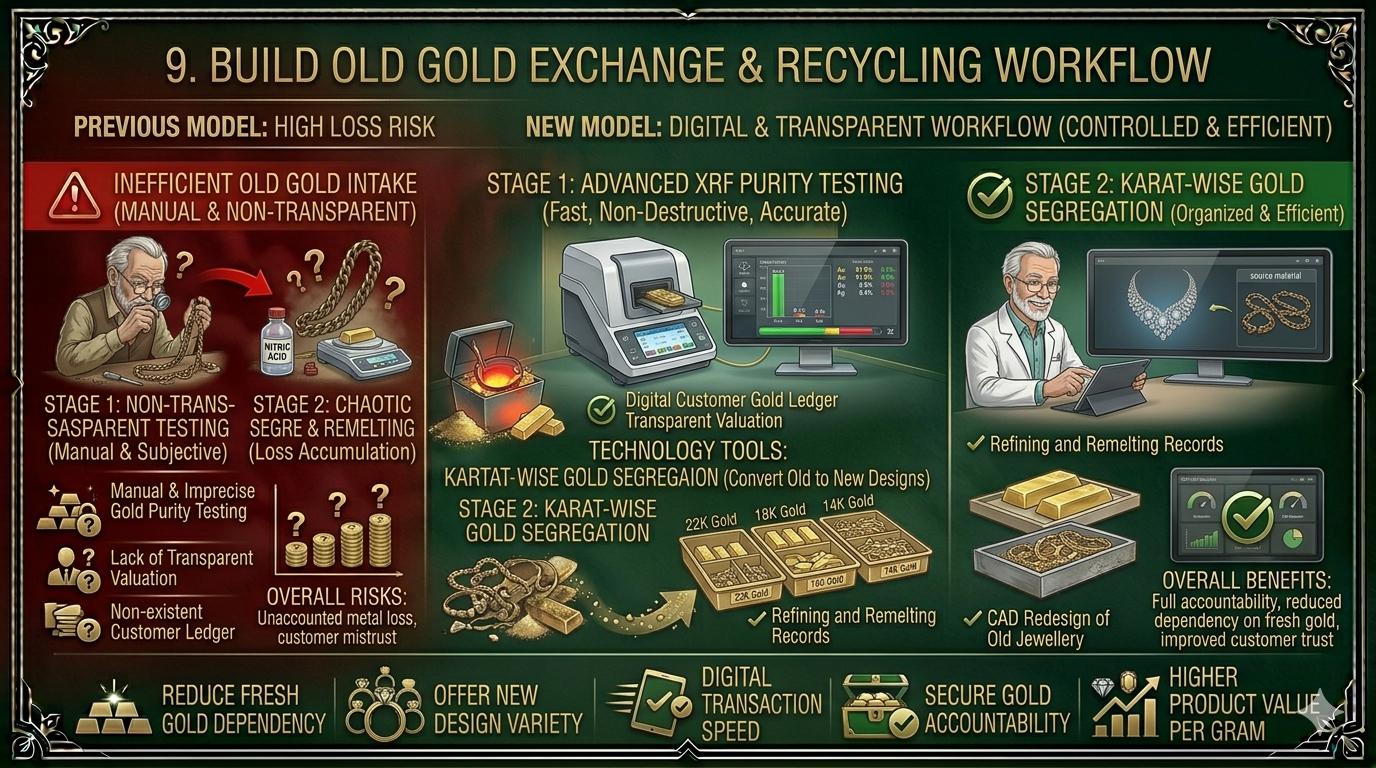
Old gold exchange will become more
important as customers hesitate to buy fresh gold at high prices. Jewellers
should build a proper technology-based old gold system.
This can include XRF purity testing,
digital customer gold ledgers, karat-wise gold segregation, transparent
valuation, refining and remelting records and CAD redesign of old jewellery
into new designs.
This helps jewellers reduce dependence on
fresh gold while giving customers a practical way to purchase new jewellery.
A strong old gold exchange workflow can
also improve customer trust, increase repeat visits and support more
sustainable jewellery practices.
10. Use Live Gold Rate Pricing And
Quotation Software
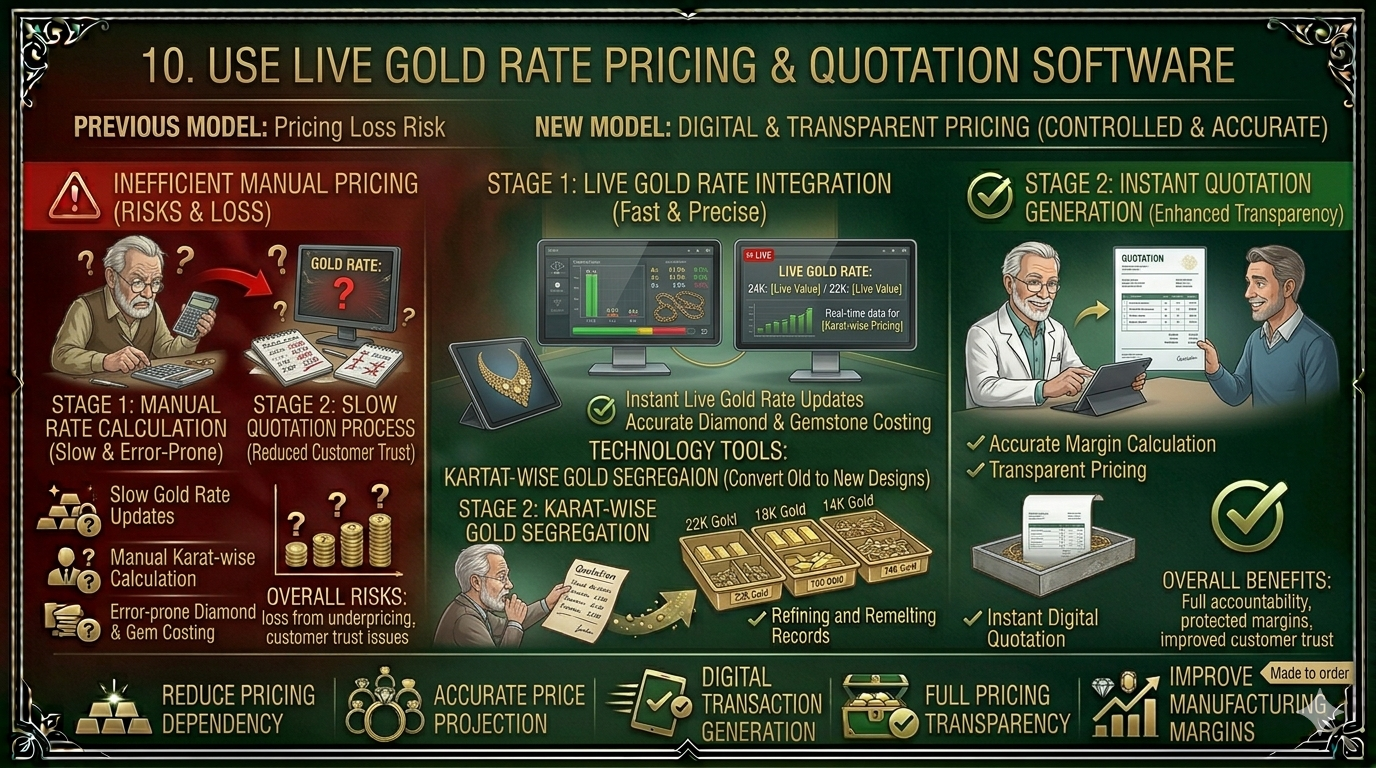
Manual pricing can create losses when rates
move quickly. Jewellers should use software that calculates prices accurately
and transparently.
A good system should manage live gold rate
updates, karat-wise pricing, diamond and gemstone costing, making charges, GST,
margin calculation, old gold exchange value and instant customer quotations.
This improves transparency, protects
jewellers from underpricing and gives customers greater confidence in the
buying process.
In a volatile gold market, pricing accuracy
is a business necessity.
The Road Ahead
The high-gold-price environment is pushing
Indian jewellers towards a new operating model. The future will not belong only
to those who sell more gold, but to those who create more value from every
gram.
Technology can help jewellers reduce gold
dependency, protect metal recovery, improve design value, control inventory and
offer customers more variety without locking capital in heavy physical stock.
For Indian jewellery businesses, the next
phase of growth will be defined by one clear shift: from gold-weight selling to
design-led, technology-supported value creation.
TECH RADAR | New Product Introduction

iJewel3D Brings Virtual
Inventory Thinking To Jewellery Retail
Subheadline:
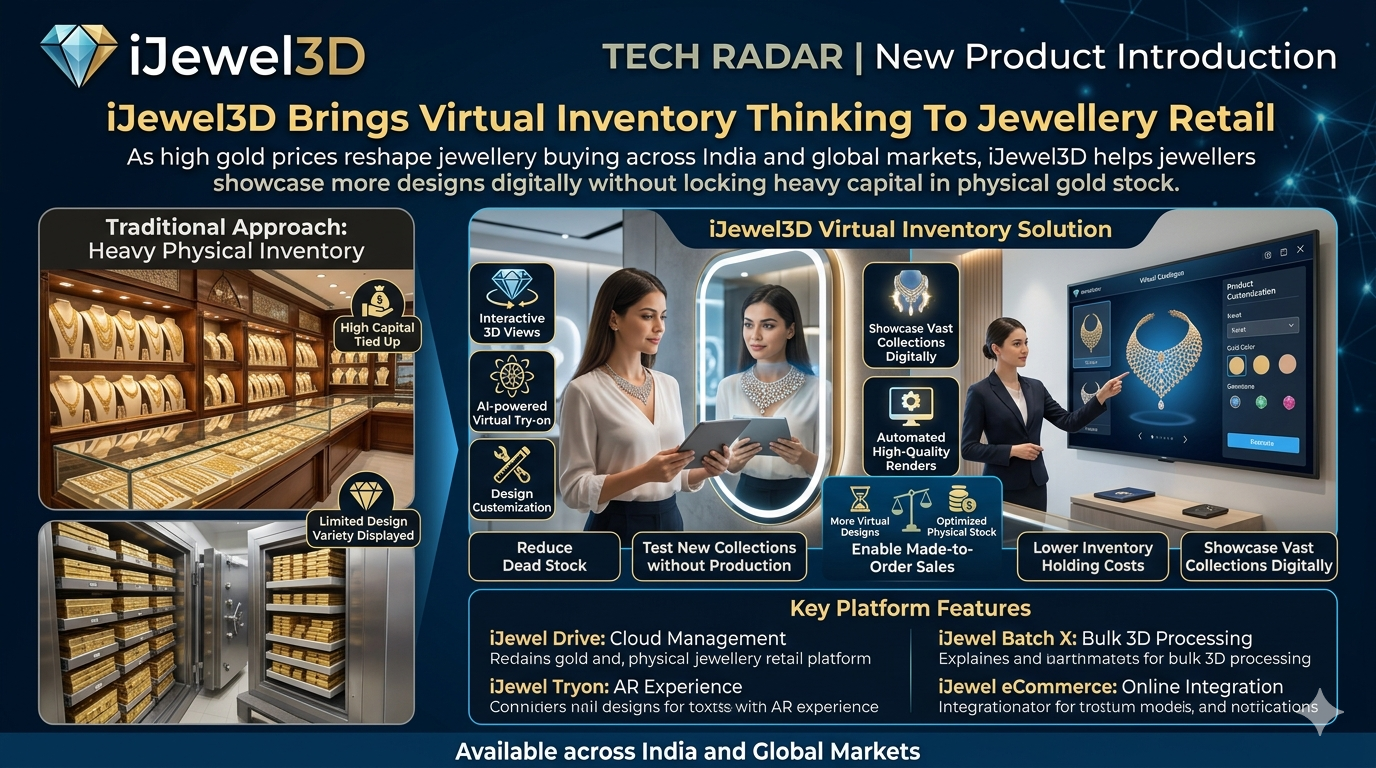
As high gold prices reshape jewellery buying across India and global markets, iJewel3D helps jewellers showcase more designs digitally without locking heavy capital in physical gold stock.
India / Global:
With gold prices remaining high, jewellers across India and international markets are rethinking how much physical inventory they need to hold. In this environment, iJewel3D introduces a digital-first solution through 3D visualisation, AR try-on, digital catalogues and rendering automation.
The platform enables jewellers, manufacturers and brands to convert jewellery designs into interactive 3D models that can be viewed, customised and shared digitally. Through tools such as iJewel Drive, iJewel Tryon, iJewel Batch X and iJewel eCommerce, it supports 360-degree views, virtual try-on, high-quality renders, videos and online product customisation.
For the jewellery industry, virtual inventory is becoming increasingly important. Instead of physically stocking every design in different weights, karats, colours and gemstone combinations, retailers can display a wider collection digitally while keeping actual gold stock limited to fast-moving and high-conversion products.

 This approach can help jewellers
reduce dead stock, improve design selection, support made-to-order selling and test new collections before
investing in physical
production. It is also valuable
for diamond and gemstone jewellery, where customers
can visualise multiple combinations before placing an order.
This approach can help jewellers
reduce dead stock, improve design selection, support made-to-order selling and test new collections before
investing in physical
production. It is also valuable
for diamond and gemstone jewellery, where customers
can visualise multiple combinations before placing an order.
Physical gold
inventory will continue to play an important role in trust, bridal buying and
instant purchase decisions. However, platforms like iJewel3D show how jewellers
can balance actual stock with virtual inventory. In today’s high-gold-price environment, digital presentation is no longer
only a technology feature;
it is becoming a strategic retail tool for jewellery businesses in India and
across the world.