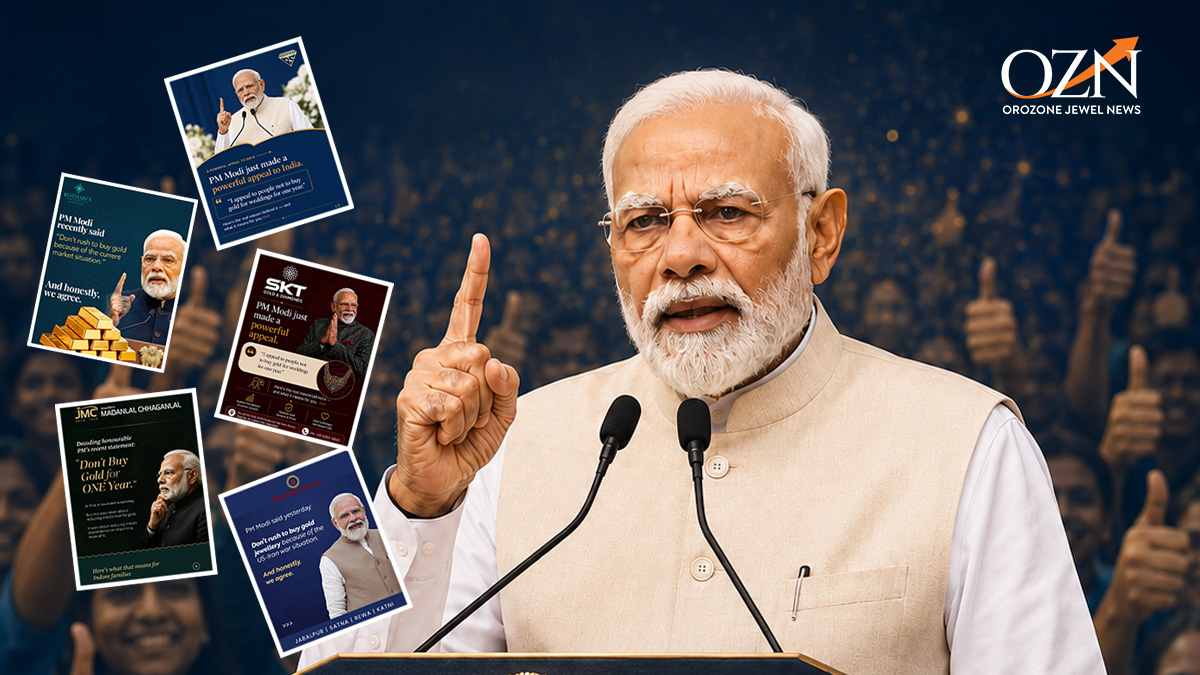
New Delhi: Prime Minister Narendra Modi’s recent appeal
on postponing gold purchases has placed the jewellery trade at the centre of a
larger economic and retail conversation. While some jewellers remain concerned
about the possible impact on wedding-season demand and store footfall, a
growing number of retailers are using the moment to promote old gold exchange,
redesigning and recycling as practical alternatives for customers.
The appeal comes at a time when India’s dependence on
imported gold is once again under sharp focus. According to reports, India
meets almost all of its gold consumption through imports, making gold buying
closely linked to the country’s foreign exchange outflow.
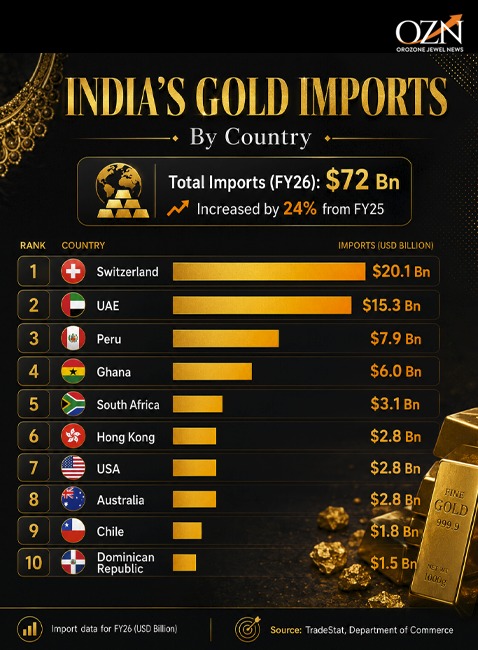
Commerce Ministry data underlines that India’s gold import
bill touched US$ 71.98 billion in FY26, compared with US$ 58 billion
in FY25. However, the rise in value was not because India imported more
gold in quantity. In volume terms, gold imports declined to 721.03 tonnes in
FY26 from 757.09 tonnes a year earlier, showing that elevated
international gold prices pushed up the overall import cost.
The country-wise import also explains why the issue
has become economically important. Switzerland remains India’s largest gold
supplier, with a share of about 40%, followed by the UAE with over 16%
and South Africa with about 10%. Gold also accounts for more than 9%
of India’s total imports, making it a significant factor in the trade deficit
and foreign exchange discussion.
The government has also raised import tariffs on gold and
silver from 6% to 15%, a move described as an effort to curb overseas
purchases and ease pressure on foreign exchange reserves. This policy backdrop
has added further weight to the industry conversation around recycling,
exchange-led buying and better use of existing household gold.
Against this backdrop, jewellers are attempting to turn the
national appeal into a customer-friendly message. Their communication is not
asking consumers to move away from gold completely. Instead, it encourages them
to unlock the value of jewellery they already own, bring unused ornaments back
into circulation and convert old pieces into newer, wearable designs.
Retailers such as SKT Gold & Diamonds, NAC Jewellers,
Samdariya Abhushan, Shree Meher Jewellers, Kothari Jewellers and Madanlal
Chhaganlal have shared campaigns around this idea. Their messaging focuses
on old gold exchange, redesigning, recycling, reduced fresh imports and smarter
use of household gold.
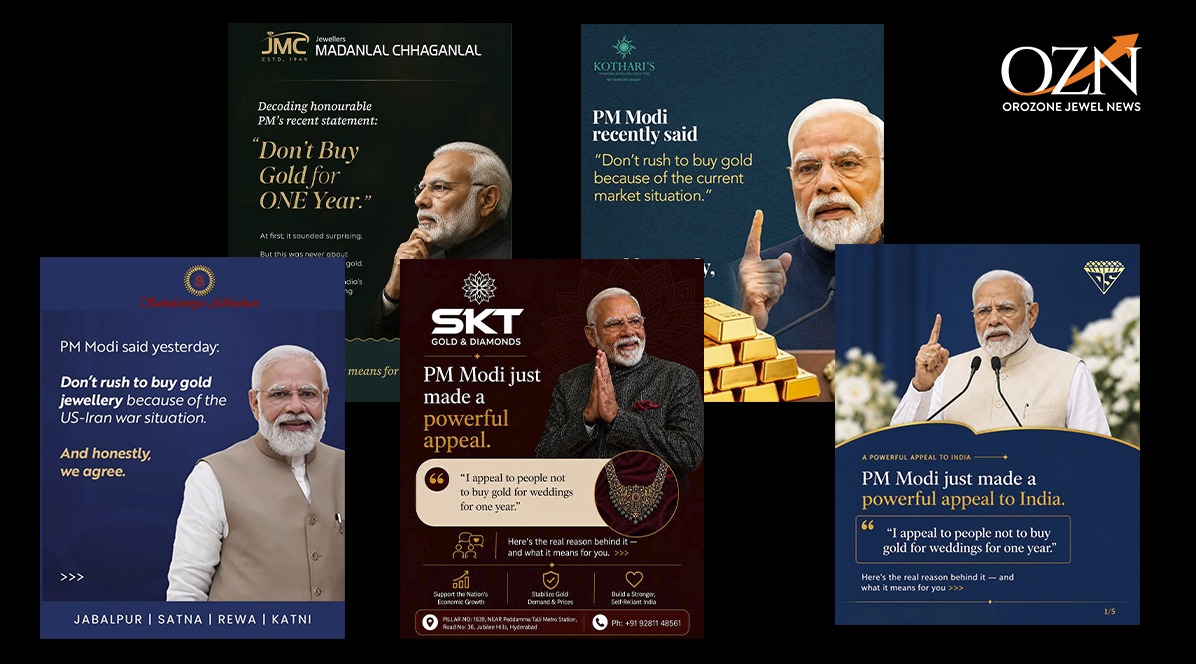
Kothari Jewellers has joined the conversation by presenting
redesign as a long-standing belief rather than a temporary response. Its
campaign encourages customers to upgrade the gold jewellery they already own
and transform old gold and diamonds into modern pieces. The brand’s message
around recreating, redesigning and rewearing positions existing jewellery as
value that can be renewed instead of lying unused.
Madanlal Chhaganlal has also built its communication around
the idea that India already holds large quantities of gold within homes,
lockers and inherited collections. The brand is encouraging customers to
transform existing gold into new designs, wedding gifts or refreshed jewellery
without adding pressure on fresh gold buying.
NAC Jewellers has highlighted old gold exchange, savings
schemes and digital gold-linked options as ways for customers to continue
engaging with gold responsibly. Its campaign connects recycled gold with
reduced forex pressure, presenting old gold circulation as a practical
alternative to new imports.
Shree Meher Jewellers has taken a similar route with its “Smart
Gold. Stronger India” positioning. The campaign encourages customers to
exchange old jewellery for new designs while supporting a more self-reliant
approach to gold consumption. Samdariya Abhushan has also urged customers to
upgrade what they already own, presenting old gold exchange as smarter for the
consumer and better for the market.
SKT Gold & Diamonds has linked the Prime Minister’s
appeal with national economic responsibility, highlighting themes such as
stabilising gold demand, supporting the economy and building a stronger India.
For jewellers, the challenge is to balance national economic
priorities with business continuity. Gold in India is not only a commodity; it
is connected with weddings, family legacy, tradition and long-term savings.
This makes any appeal to delay purchases sensitive for retailers, artisans,
manufacturers and consumers.
However, the response from these jewellers shows that the
industry is finding a middle path. Instead of allowing the appeal to become a
pause in customer engagement, retailers are using it to promote old gold
exchange, redesign-led buying and recycling-led retail.
This approach may help jewellers keep customer conversations
alive while aligning with the broader national message. It allows the trade to
remain active, supports store-level engagement and gives consumers an
alternative to fresh gold purchases at a time when gold prices, import
dependence and global uncertainty continue to influence buying behaviour.
The message now emerging from the trade is clear: fresh gold
buying may slow, but gold can continue to move within the economy through
reuse, redesign and responsible exchange. For the jewellery sector, this could
turn a challenging moment into an opportunity to build a smarter conversation
around India’s existing household gold.