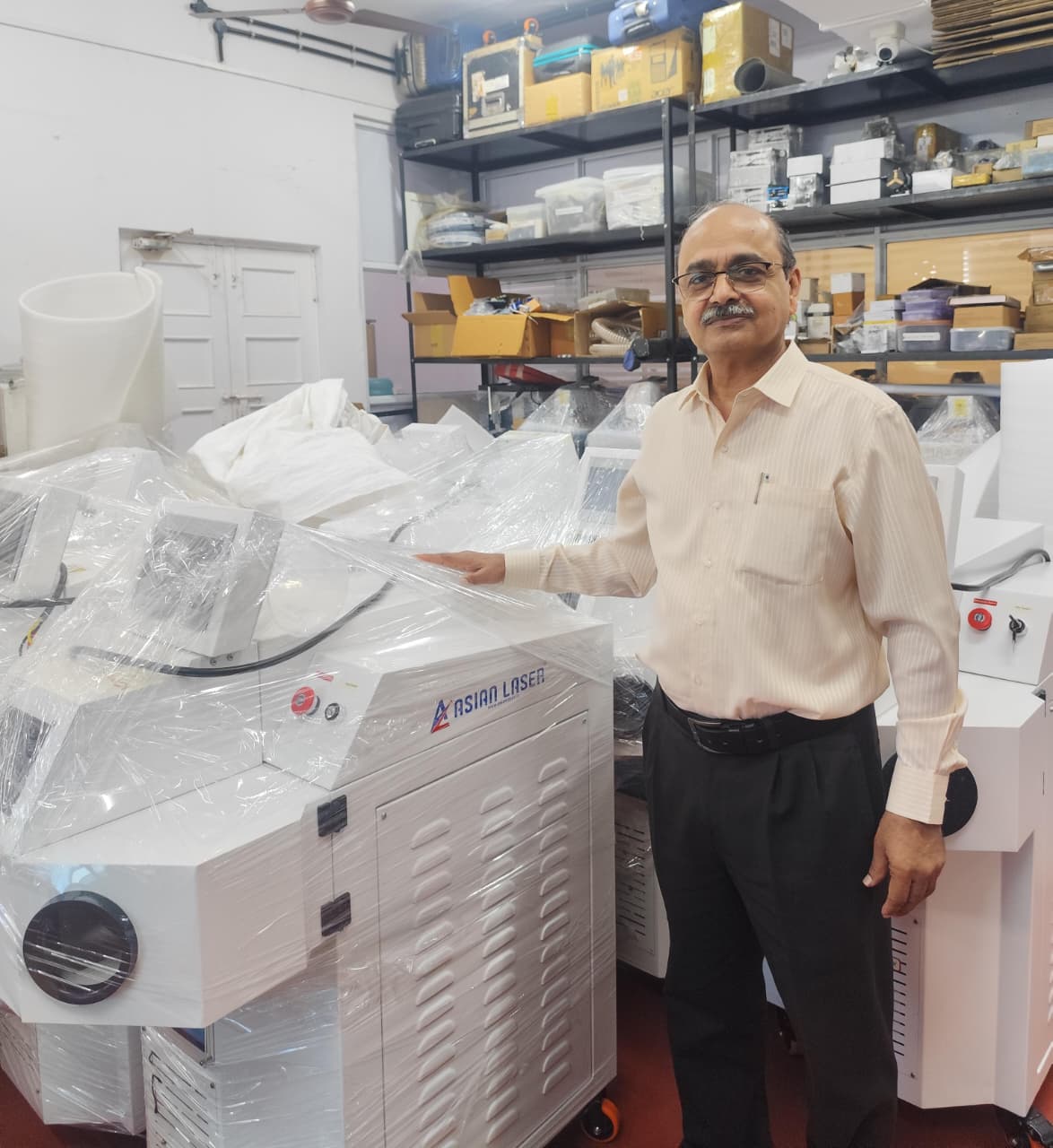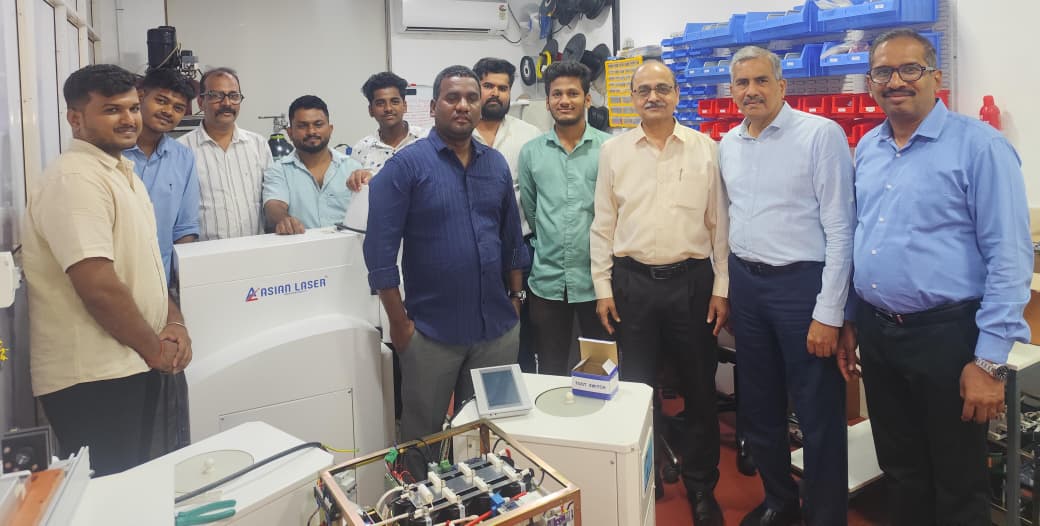
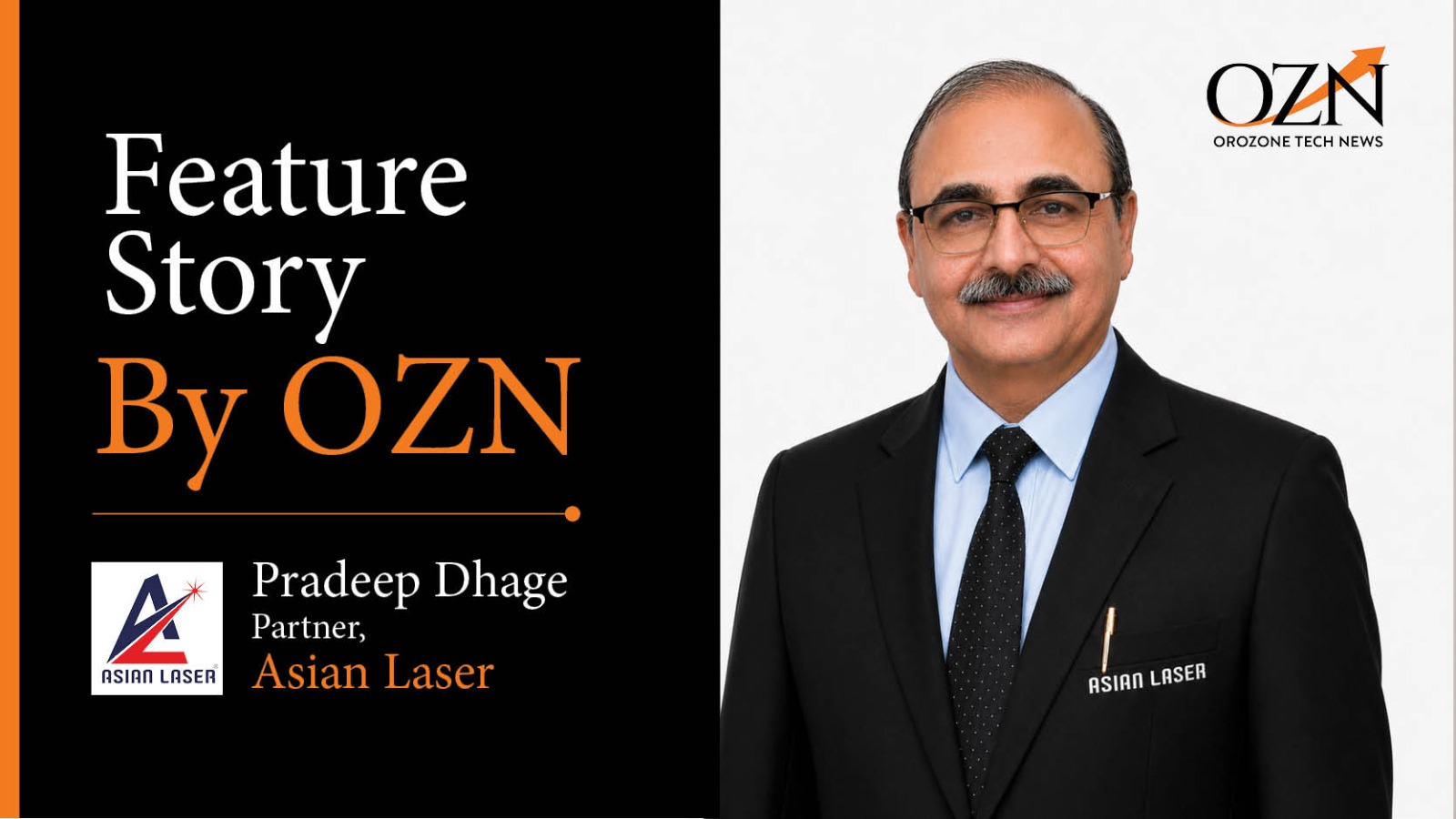
Pradeep Anant Dhage’s professional journey
began in 1985 after completing his post-graduation from Mumbai University. Over
the past four decades, he has worked across the electronics, computer, diamond
and jewellery sectors, building a strong technical understanding of
manufacturing technologies.
His work with laser machines began through
service support for different industrial applications. During this period, he
realised that better customer solutions required deeper knowledge of laser
technology. This led him to pursue formal laser training in Germany in April
2005, followed by advanced technical training in Moscow, Russia, in July 2007.
These experiences strengthened his
understanding of precision systems and gave him a closer view of how laser
technology could improve quality, productivity and process control in jewellery
manufacturing.
In this interview with Orozone Tech News,
Pradeep Anant Dhage discusses the evolution of Asian Laser, the practical role
of laser machines in jewellery production and what manufacturers should
evaluate before investing in modern equipment.
Understanding Laser Technology
Before discussing its applications in
jewellery manufacturing, it is important to understand what a laser is.
LASER stands for Light Amplification by
Stimulated Emission of Radiation.
A laser possesses several unique
characteristics that make it valuable in industrial and jewellery applications:
- Monochromatic: Laser light consists
of a single wavelength.
- Coherent: The light waves remain in
phase with each other.
- Highly Directional: The beam
travels with minimal divergence, allowing precise targeting.
- High Intensity: A large amount of
energy can be concentrated into a very small area.
- Precisely Focused: The beam can be
focused to an extremely fine point, enabling precision work.
- Polarized: Many laser systems
produce light with controlled polarization for specialised industrial
applications.
For the jewellery industry, the most
important advantage is the ability to focus a high-energy beam into an
extremely small spot. This allows manufacturers to perform highly precise
welding, engraving and cutting while minimising heat impact and material loss.
How did Asian Laser begin, and what gap
did you see in the Indian manufacturing market?
Asian Laser was founded in 2015 by Pradeep
Anant Dhage, along with Rajesh Patil, Vice President of JMA, and Ranjit
Acharekar. The company was started with the objective of delivering world-class
laser solutions to Indian manufacturers.
According to Dhage, the market required
reliable, cost-effective and application-focused laser systems supported by
strong technical service. The aim was not only to supply machines, but to help
customers improve their manufacturing processes through the right use of laser
technology.
Today, Asian Laser is an ISO and
CE-certified company and is recognised under the Make in India initiative.
Dhage says the company’s focus on technology, application support and prompt
service has helped it build trust within the laser industry.
Why has laser technology become
important for jewellery manufacturers?
Jewellery manufacturing demands precision,
consistency and productivity.
Laser technology helps manufacturers
achieve fine detailing, accurate marking, precise cutting and strong welding
with minimal material loss.
Dhage explains that laser systems reduce
manual dependency, improve process quality and support faster production. In a
competitive manufacturing environment, he believes laser technology has become
an essential tool for jewellers who want to improve efficiency and maintain
consistency.
How would you explain laser welding,
engraving and cutting to manufacturers who are new to the technology?
Laser welding is used to join metal parts
with high precision and minimal heat impact. It is useful for repair work,
component joining, stone-set jewellery work and delicate applications where
control is important.
Laser engraving is used for designs,
patterns, logos, branding, serial numbers, hallmarking and personalisation.
Asian Laser’s laser marking machine is also approved by BIS for hallmarking
centres.
Laser cutting is used to create intricate
shapes and designs with accuracy and smooth edges.
Together, these technologies help jewellers
improve quality, finish, design capability and productivity.
Are laser machines useful only for large
factories?
Dhage says this is a common misconception.
Laser machines are useful for large
factories as well as small and mid-sized jewellery units.
For smaller workshops, laser technology can
help improve repair quality, reduce rework, save time and increase
productivity. It can also help them offer new services such as precision
welding, engraving, hallmarking and customisation.
According to him, the return on investment
can be attractive when the machine is selected according to the manufacturer’s
actual application and production requirement.
What are the most common jewellery
applications for laser welding?
Laser welding is widely used for chain
repair, ring resizing, stone-set jewellery repair, correction of casting defects
such as porosity and joining delicate jewellery components.
One of its major advantages is that repairs
can often be carried out without removing stones. Since the heat is applied
only to a controlled area, the process helps protect gemstones and preserve the
original finish of the jewellery.
This makes laser welding valuable for
manufacturers, retailers, repair centres and workshops handling fine and
delicate jewellery.
What role does laser engraving play in
branding, hallmarking and personalisation?
Laser engraving has become important for
product identification and brand building.
It enables precise hallmarking, brand
logos, serial numbers, product codes and custom markings.
It also supports personalisation through
names, messages and design details. Dhage notes that personalisation is moving
beyond text, with new concepts where jewellery can be scanned to access audio
or video memories on a mobile device.
Such applications help jewellery businesses
add emotional value, strengthen brand identity and offer differentiated
products to customers.
How does laser welding reduce rework,
finishing time and material loss?
Laser welding is a controlled process that
applies heat only where required.
This reduces damage to surrounding areas
and helps preserve the original finish of the jewellery.
The precision of the process reduces the
need for repeated correction, excess polishing and additional finishing. It
also helps lower material loss.
For manufacturers, this leads to faster
repair, improved accuracy, better productivity and lower operating costs.
How should manufacturers calculate
return on investment before buying a laser machine?
Dhage says manufacturers should calculate
ROI by looking at multiple factors, not only the purchase price.
They should consider savings in labour,
reduction in rework, lower material loss, improved productivity, faster
delivery and the ability to offer additional services such as welding,
engraving and customisation.
A laser machine should be viewed as a
long-term production asset. When used properly, it can improve quality,
increase output and support business growth.
What should manufacturers check before
buying a laser machine?
Before investing in a laser machine,
manufacturers should evaluate machine performance, reliability, ease of
operation and suitability for their specific application.
Dhage also highlights the importance of
after-sales service, spare parts availability and operator training. According
to him, the machine should support the manufacturer’s current requirements
while also allowing room for future growth.
He advises manufacturers not to buy a
machine only on the basis of price, but to assess its long-term value and
service support.
Which Asian Laser machines are suitable
for different jewellery applications?
Asian Laser offers machines for different
production needs.
Desktop laser welding machines are suited
for jewellery workshops, showrooms, repair centres and retailers. They are
useful for chain repair, ring resizing and stone-set jewellery work.
Deep engraving machines are suitable for
hallmarking, branding, personalisation and decorative engraving.
Laser cutting machines are useful for
manufacturers producing intricate designs and precision components.
For customers seeking premium performance,
Asian Laser also offers Italian laser welding machines such as FINO 100 and
POTENZA 225. FINO 100 is designed for showroom use and delicate repair work,
while POTENZA 225 is suited for higher production environments requiring more
power and versatility.
Dhage says the right machine depends on
application, production volume and future business plans.
Where is laser technology heading in
jewellery manufacturing?
Dhage expects laser technology to become
more integrated into jewellery manufacturing over the next five years.
He sees greater use of automation, high
precision systems, traceability, customisation and advanced production
processes. Lasers will continue to support welding, engraving, cutting and
quality-focused applications.
As global markets demand better
consistency, faster delivery and superior finishing, laser technology can help
Indian manufacturers meet international standards and strengthen their
competitiveness in export markets.
What is your message to jewellery
manufacturers?
Dhage believes technology is no longer
optional for jewellery manufacturers.
“The jewellery industry is evolving
rapidly, and technology is no longer a luxury. It is a necessity. Manufacturers
must continuously upgrade their processes, adopt modern systems and focus on quality,
efficiency and innovation.”
His message to manufacturers is to invest
in technology before it becomes unavoidable. Modern laser systems can improve
quality, productivity and competitiveness, helping jewellery manufacturers
build stronger businesses in both domestic and export markets.
Company Update
As part of its continued expansion, Asian
Laser is relocating to a larger and more advanced facility at WICEL, MIDC,
Andheri East, Mumbai.
The new centre will include:
- Live demonstration zones for laser machines
- Dedicated hands-on training facilities
- Expert technical faculty for product demonstrations
- Enhanced infrastructure for customer support and application
development
The expansion reflects the company’s
ongoing focus on customer training, application support and technology
awareness within the jewellery manufacturing sector.
Quick Rapid Fire
One laser machine every jewellery
manufacturer should evaluate:
A jewellery laser welding machine, because it offers quick improvement in
repair quality, productivity and process control.
One process where laser technology gives
immediate improvement:
Jewellery repair and welding.
One mistake manufacturers should avoid
while buying machines:
Choosing a machine only on price instead of application suitability, machine
quality and after-sales support.
One key factor in choosing a laser
supplier:
Reliable after-sales service and technical support.
One future trend in jewellery
manufacturing technology:
Greater automation and integration of laser technology for precision,
traceability and customised production.
One message for young jewellery
manufacturers:
Invest in technology early, keep learning continuously and focus on quality.
Technology will be critical for future growth and global competitiveness.